
Product Introduction
1. Product Overview
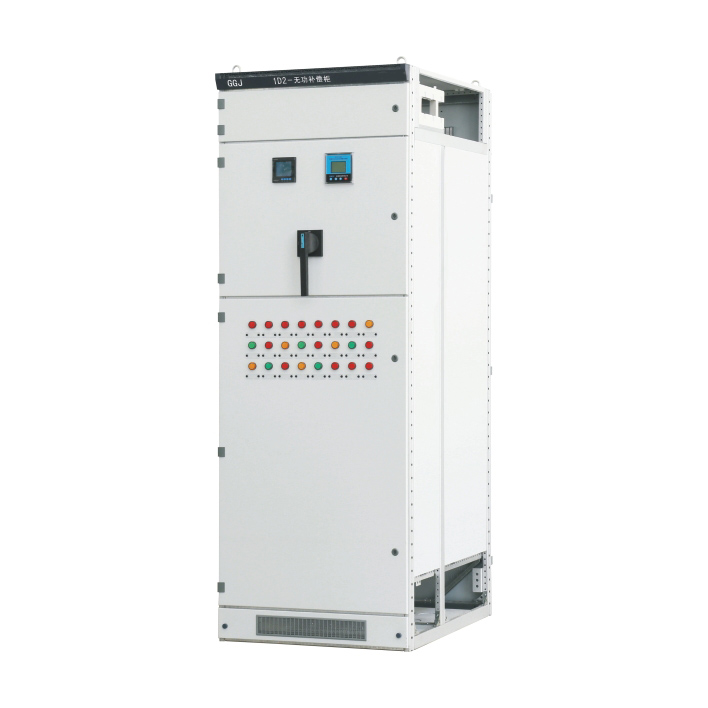
This device can effectively improve the power factor of electrical loads, reduce line losses, and enhance the actual load capacity of transformers, thus achieving significant energy-saving effects. Meanwhile, the adoption of specific reactors in the system can also effectively prevent harmonic amplification and absorb most harmonic currents, ensuring that the total harmonic voltage distortion limit and the harmonic current content limit of each order comply with national standards and achieve the goal of harmonic management.
However, using ordinary contactors to switch capacitor banks will result in large inrush currents, slow compensation time, high maintenance costs, and short service life. Therefore, we recommend users to give priority to the use of dynamic reactive power compensation devices in the following scenarios, such as low-voltage power grids of transformer substations, production workshops in industrial and mining enterprises, and civil buildings. It is particularly suitable for power transmission and distribution systems with frequently changing loads and unstable reactive power.
This device can effectively improve the power factor of electrical loads, reduce line losses, and enhance the actual load capacity of transformers, thus achieving significant energy-saving effects. Meanwhile, the adoption of specific reactors in the system can also effectively prevent harmonic amplification and absorb most harmonic currents, ensuring that the total harmonic voltage distortion limit and the harmonic current content limit of each order comply with national standards and achieve the goal of harmonic management.
However, using ordinary contactors to switch capacitor banks will result in large inrush currents, slow compensation time, high maintenance costs, and short service life. Therefore, we recommend users to give priority to the use of dynamic reactive power compensation devices in the following scenarios, such as low-voltage power grids of transformer substations, production workshops in industrial and mining enterprises, and civil buildings. It is particularly suitable for power transmission and distribution systems with frequently changing loads and unstable reactive power.
This product complies with standards including GB/T 15576-2008 Low-Voltage Assembled Reactive Power Compensation Equipment and IEC 60439 Low-Voltage Assembled Switchgear and Controlgear.
2. Model and Meaning

3. Use conditions
>Ambient temperature:-5℃~+40℃
>Relative humidity: not more than 90% (20℃)
>Altitude: not more than 2000m
>No danger of explosion in the surrounding medium, no gas sufficient to damage and corrode the metal, no conductive dust, not easy to be installed in the place of violent vibration, no rain or snow erosion. >Installation site is not susceptible to severe vibration, rain or snow erosion.
>Ambient temperature:-5℃~+40℃
>Relative humidity: not more than 90% (20℃)
>Altitude: not more than 2000m
>No danger of explosion in the surrounding medium, no gas sufficient to damage and corrode the metal, no conductive dust, not easy to be installed in the place of violent vibration, no rain or snow erosion. >Installation site is not susceptible to severe vibration, rain or snow erosion.
4. Product Features
Inductive loads in the power grid (generators, chokes, transformers, induction heaters and welders, etc.) all produce varying degrees of hysteresis, known as inductance. Inductive loads have the property that a change in voltage direction maintains the direction of the current (e.g. positive) for some time. Once this phase difference between current and voltage exists, reactive power is generated and is fed back into the grid. In AC grids (50/60 Hz), this process is repeated 50 or 60 times per second, so an obvious solution is to directly store and release this inductive power energy (reactive power) temporarily through capacitors, thus reducing the reactive power exchange in the grid.
Strong general performance. The compensation cabinet can be combined with various cabinets at home and abroad, such as MNS, GCK, GGD, etc.;
The combination of capacitor compensation is diversified and flexible. It has Y-type compensation mode, △-type compensation mode and Y + △1 combination compensation mode.
Communication mode is diversified. With RS-232/485 communication interface, wireless digital transmission module or GPRS module to implement long-distance communication;
accurate and safe control. Voltage over-zero trigger, no inrush current over-zero resection when putting into operation, no high voltage when breaking off;
Long service life, under maintenance-free, the service life is up to more than 100,000 hours.
Inductive loads in the power grid (generators, chokes, transformers, induction heaters and welders, etc.) all produce varying degrees of hysteresis, known as inductance. Inductive loads have the property that a change in voltage direction maintains the direction of the current (e.g. positive) for some time. Once this phase difference between current and voltage exists, reactive power is generated and is fed back into the grid. In AC grids (50/60 Hz), this process is repeated 50 or 60 times per second, so an obvious solution is to directly store and release this inductive power energy (reactive power) temporarily through capacitors, thus reducing the reactive power exchange in the grid.
Strong general performance. The compensation cabinet can be combined with various cabinets at home and abroad, such as MNS, GCK, GGD, etc.;
The combination of capacitor compensation is diversified and flexible. It has Y-type compensation mode, △-type compensation mode and Y + △1 combination compensation mode.
Communication mode is diversified. With RS-232/485 communication interface, wireless digital transmission module or GPRS module to implement long-distance communication;
accurate and safe control. Voltage over-zero trigger, no inrush current over-zero resection when putting into operation, no high voltage when breaking off;
Long service life, under maintenance-free, the service life is up to more than 100,000 hours.
5. Technical Features
Automatically compensate reactive power and improve power factor.
Improve equipment efficiency and save investment.
Reduce distribution line losses and transformer losses.
Change the voltage quality and improve the reliability of power supply.
Automatically compensate reactive power and improve power factor.
Improve equipment efficiency and save investment.
Reduce distribution line losses and transformer losses.
Change the voltage quality and improve the reliability of power supply.
6. Technical Summary
System voltage: AC450V or less
Switching time: t ≤ 20ms
Input inrush current: <25In
Rated frequency: 50Hz±50%
Sampling current: 0 ~ 5A
Native power consumption: ≤ 15W
Sensitivity: 100mA
System voltage: AC450V or less
Switching time: t ≤ 20ms
Input inrush current: <25In
Rated frequency: 50Hz±50%
Sampling current: 0 ~ 5A
Native power consumption: ≤ 15W
Sensitivity: 100mA
7.Mounting Dimension Drawing

8.Ordering Information:
Main circuit diagram;
Compensation capacity and compensation method;
If the product does not meet the normal conditions of use, please specify in advance.
Main circuit diagram;
Compensation capacity and compensation method;
If the product does not meet the normal conditions of use, please specify in advance.